
East Point Previous Resident Sources
The best starting source depends on the date. Current work begins with Fulton parcel data. Twentieth-century occupants often appear in reverse directories and released census schedules. Older title work may require archive deed books, tax digests, plats, or probate records. Every source answers only part of the question.
| Source | Years It Covers | Where Held | What It Shows |
|---|---|---|---|
| Current parcel layer | Current tax year | Fulton QPublic / GIS | Owner, situs, parcel ID, land description |
| GSCCCA deed index | At least 1999 forward statewide; older Fulton span unstated | Online / courthouse | Title parties, filings, book and page |
| Fulton deeds and mortgages | 1850-1931 | Georgia Archives | Older title instruments |
| Haines criss-cross | 1946-2016/17 | Central Special Collections | Listed occupants by address |
| Atlanta and suburban directories | 1859-1860 through 1991 | Central Special Collections | Names, addresses, occupations |
| Federal census | Released schedules through 1950 | NARA / library databases | Households and relationships |
| East Point permits | Official span not stated | City department / records request | Work, occupancy, owner or applicant clues |
Use the parcel and deed chain for ownership. Use Haines, city directories, and census records for occupancy. The difference is vital: the person taxed as owner may have lived elsewhere, while a listed renter may never appear in a deed.
Start East Point Address History
Search the current address in Fulton QPublic. Copy the parcel ID, owner, situs, separate owner mailing address, subdivision, lot, block, land lot, district, and any deed reference. The parcel ID is a current tax key. The legal description is the better bridge to old title records when a street name or number has changed.
Do not equate a mailing address with occupancy. Matching owner mail and situs can support a theory, but it cannot prove that the owner lived there. A company, estate, trust, or absent owner may hold title. This first card sets the land identity, not the full household.
Trace Fulton Deeds Backward
The GSCCCA Real Estate Index supplies the central ownership trail. Start with today's owner as grantee, the party receiving title. Open that purchase record, note the grantor who gave title, then search that seller as a prior grantee. Repeat the handoff while keeping book, page, filing date, instrument type, and legal description together.
- Verify the current parcel and copy its complete legal description.
- Find the current owner's acquisition deed and record the seller, date, book, page, and property terms.
- Search that seller as an earlier buyer. Confirm the same land through lot, block, subdivision, land lot, or cross-reference.
- Repeat until the online results stop. Do not claim a Fulton online start year that the official source does not state.
- Move to the courthouse records room or Georgia Archives for older instruments and missing images.
- Grantor / grantee
- The grantor gives an interest in land; the grantee receives it.
- Chain of title
- The linked sequence of recorded transfers for the same property.
- Legal description
- Land terms such as lot, block, subdivision, land lot, or metes and bounds that identify property beyond its mail address.
The Fulton plats and land records office explains the records-room route.
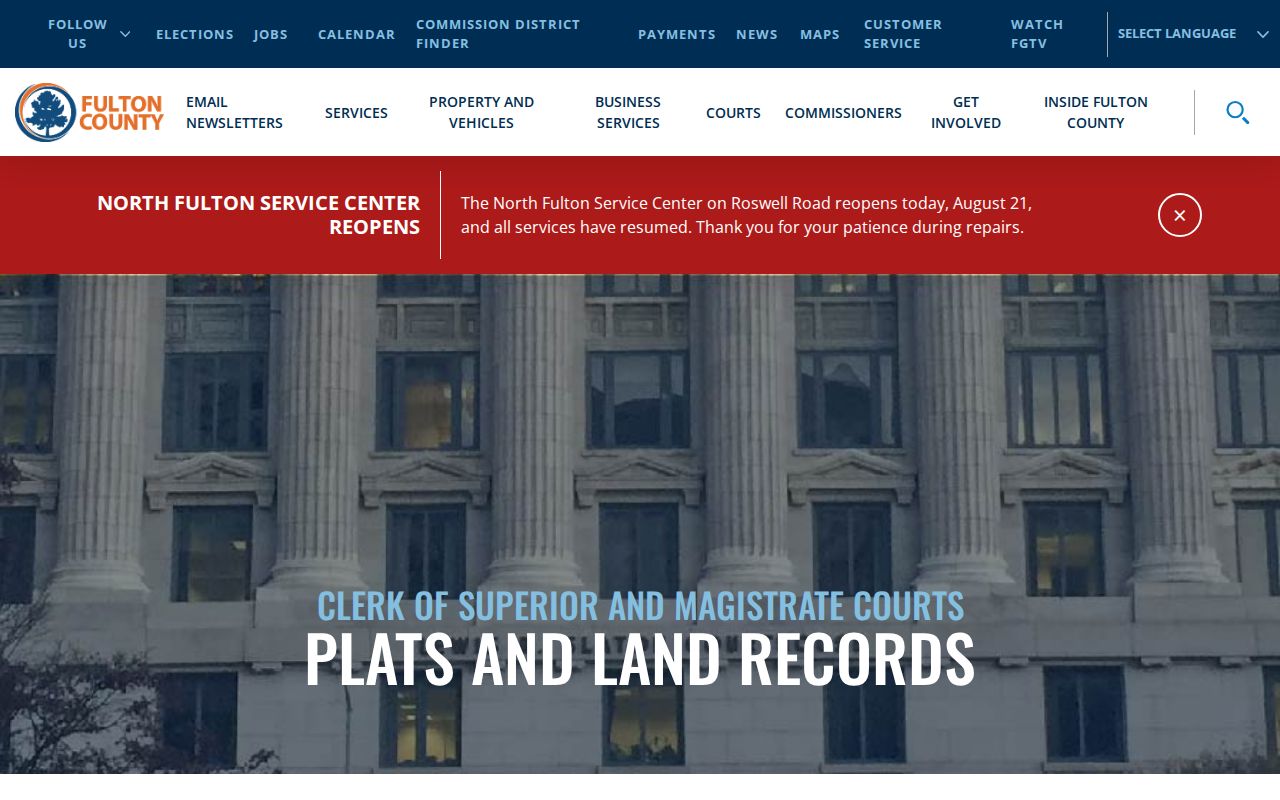
The records room is essential when a summary does not supply an image or the online trail ends.
When East Point Online Deeds Stop
GSCCCA documents at least a 1999 statewide minimum, but an accessible official source did not state the full historic depth for Fulton County. A free limited-use account searches deed, lien, plat, and UCC summaries without displaying images. Paid sessions provide added image functions, while courthouse public terminals provide free image access during business hours.
For the earlier trail, Georgia Archives catalogs Fulton Superior Court deeds and mortgages from 1850 through 1931. Search the archive catalog and county microfilm index, then use the clerk's room for materials that remain with the court. This fallback chain is part of a sound previous residents search, not evidence that an older transfer never happened.
East Point Crosses Old Counties
East Point historical work changes jurisdiction in December 1932. Campbell County was added to Fulton during that merger, so pre-merger deeds, probate files, tax material, court minutes, and marriage records may be cataloged under Campbell County. Post-merger research generally uses Fulton. Search both names in the Georgia Virtual Vault County Microfilm Index.
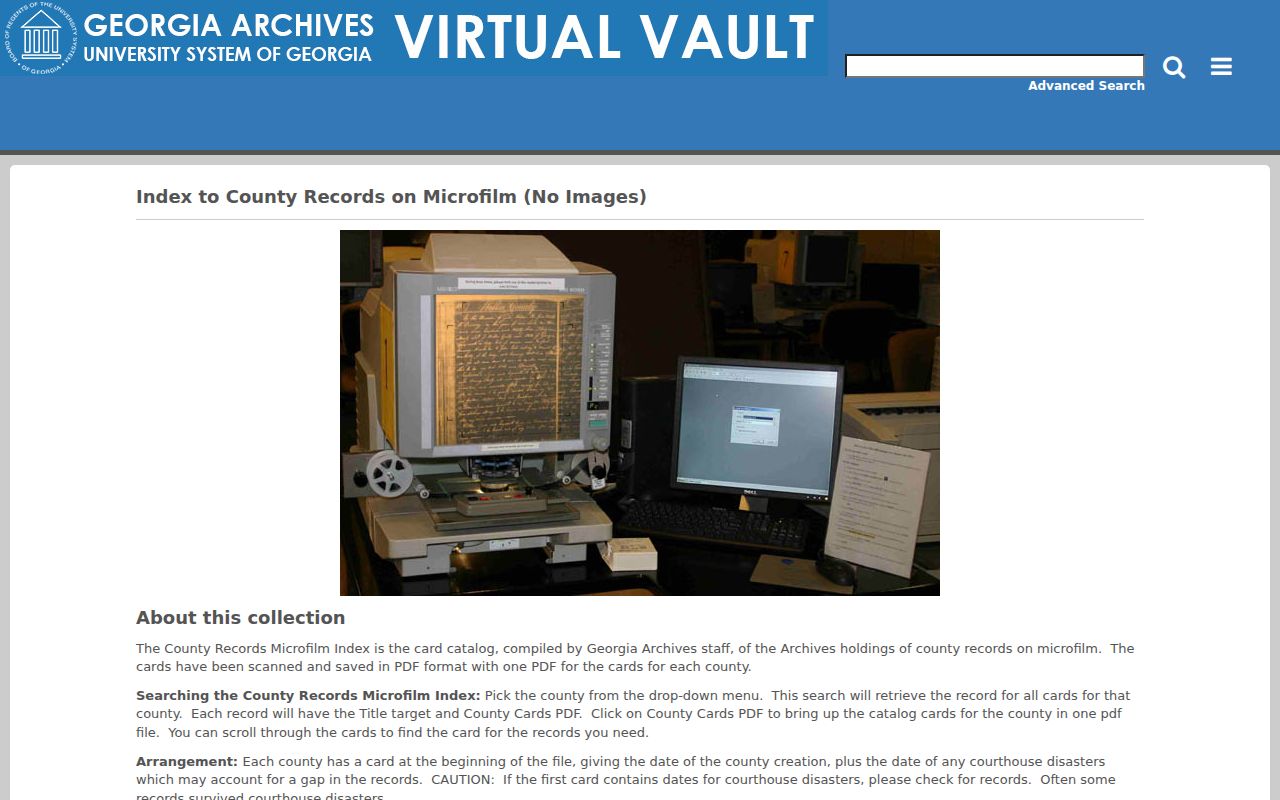
The county cards help locate record groups that a search confined to modern Fulton could miss.
This is a records-geography issue. East Point is not the Fulton county seat, and older labels may follow the office that created a document rather than the present city or ZIP.
East Point Deed Books Lost
Fulton deed books B, F, and H and mortgage book E were reportedly thrown down a courthouse well and destroyed around 1880. That vivid loss can break a neat chain even when the property stayed in the same family. Never invent a transfer to fill the gap.
Build around the loss with surviving deed books, tax digests, plats, probate files, court minutes, and later instruments that cite an earlier book or party. Georgia tax digests are nearly complete from about 1872 forward. Fulton Probate also reports historic material reaching the 1840s, including rediscovered Campbell wills. Those wills may identify heirs and land when a deed book does not survive.
Lost-book check. A gap near 1880 may reflect destroyed Fulton volumes, so test tax, plat, probate, and cross-reference evidence before stopping.
Pair East Point Directory Years
Ownership is only half of a house history. Central Special Collections holds Atlanta and suburban city directories beginning in the nineteenth century and Haines criss-cross volumes for the later address era. The released federal census adds household members and relationships at ten-year intervals. As of 2026, the 1950 census is the latest public population schedule under the 72-year rule.
- Choose a directory just before and after a known deed, census, death, or permit date.
- Search the name section, then check the street-number section or Haines volume for the address.
- Record spelling, spouse, occupation, street number, telephone, and owner or renter marks when shown.
- Compare the address with a released census schedule and note every household member exactly as recorded.
- Step to the next directory year. Treat a missing entry as a question, not proof of a move.
The shelf's full publishers and year runs are covered by the East Point city directory research. Here, the volumes serve the single-address trail.
Map East Point House Changes
East Point permit and certificate files can mark construction, alteration, or occupancy events and may name an owner or agent. The city also publishes an address creation or change form, proof that street numbers are administrative data that can change. No official citywide East Point renumbering year was found, so compare city minutes, plats, directories, and the specific address file.
Historic fire-insurance maps can show a building footprint, material, and use, but the research did not verify exact official East Point sheets and years. Do not promise a map for every property. Georgia's 2025 guide to documenting a property recommends deeds, tax records, directories, maps, photos, and archival repositories, which is a sound mix for a local house history.
NARA Records for East Point
The National Archives at Atlanta holds federal census, military, pension, bounty-land, passenger, naturalization, court, and agency records. The facility is in Morrow and its research room is appointment-only on weekdays. Federal material can explain a household between local title events, though it does not replace a county deed.
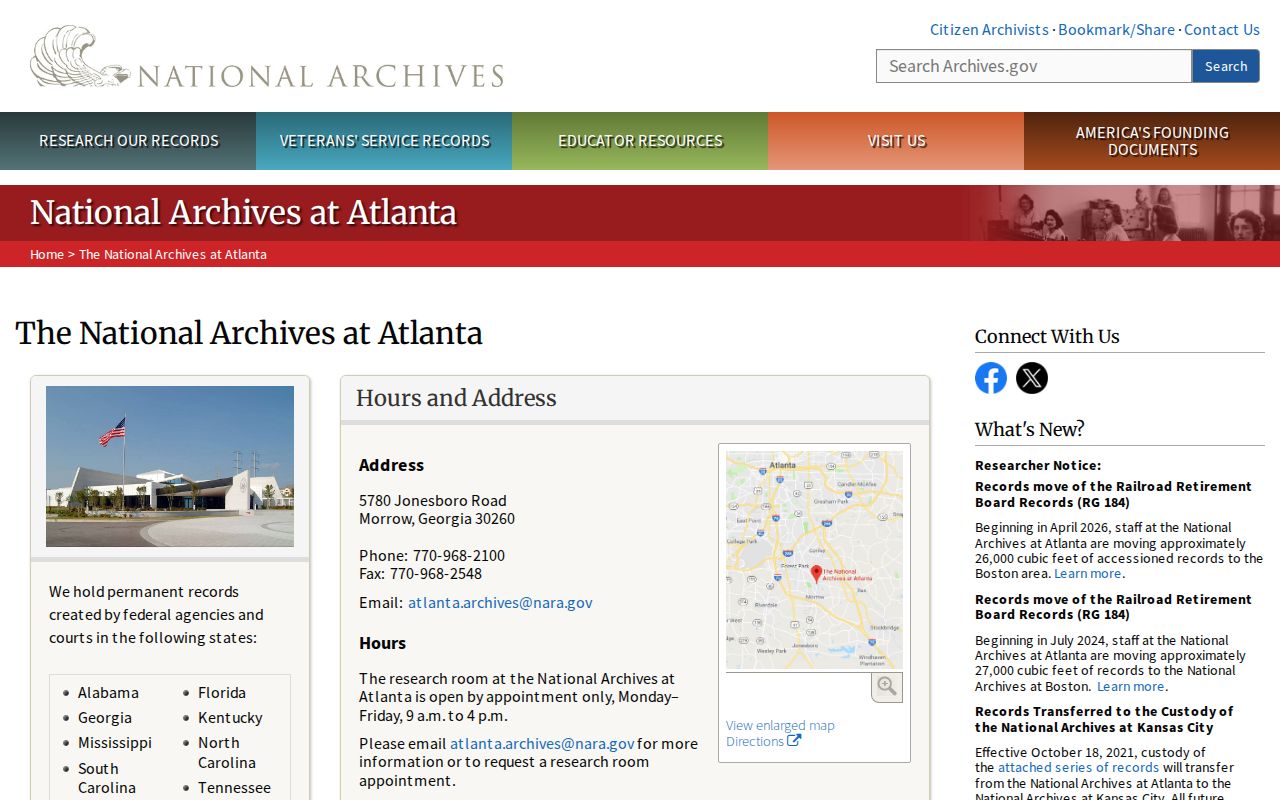
The archive broadens the household trail after a local address and person have been identified.
Confirm East Point Past Households
Close the previous residents trail with sources that explain why a name vanishes. Obituaries and death notices can name relatives and former communities. Probate files may identify heirs, property, and personal representatives. The East Point Historical Society holds photos, maps, burial information, high-school yearbooks, family records, and copies of the Suburban Reporter, and it expressly supports family, biography, and house-history research.
A directory-listed occupant, census household, deed owner, and obituary subject may all describe different roles. Align dates and spellings before treating them as one person. If the past resident remained living during part of the trail, respect protected addresses and do not use indirect sources to defeat a confidentiality program.
Lawful use. Research East Point previous residents for family and house history. Never use records to stalk, harass, track, or harm a living person.