
East Point Directory Shelves
Fulton County Library System's Central Library Special Collections holds the strongest East Point city directory shelf. East Point appears within Atlanta, suburban, Fulton County, and Haines titles rather than in one separate annual series. Search all those catalog terms.
| Collection | Years | Where held | Access |
|---|---|---|---|
| Atlanta City Directories | 1859-1860 through 1991 | Central Special Collections | Walk-in volumes |
| Atlanta City and Suburban | From 1867 | Central Special Collections | Walk-in volumes |
| Haines Criss-Cross | 1946 through 2016-2017 | Central Special Collections | Address browse |
| Emory digitized directories | 1867-1922, 28 objects | DLG and Internet Archive | Free scans |
| Telephone books | Visible from 1933 | DLG and Library of Congress | Digital |
The combined city and criss-cross shelves form a 159-year address continuum, though not every year survives or uses the same format. Record each volume's title, publisher, year, and key with the result.
East Point Directories at Central
Central Library lists its city directory holdings and makes the volumes available for walk-in use. The East Point Branch at 2757 Main Street is a local contact, but Central is the documented repository. Questions can go to Library.SpecColl@fultoncountyga.gov. Staff can help when a catalog title omits East Point or a street changed names.
The same department holds maps, newspapers, vertical files, county histories, and genealogy databases. Appointments are encouraged for map and vertical-file work.
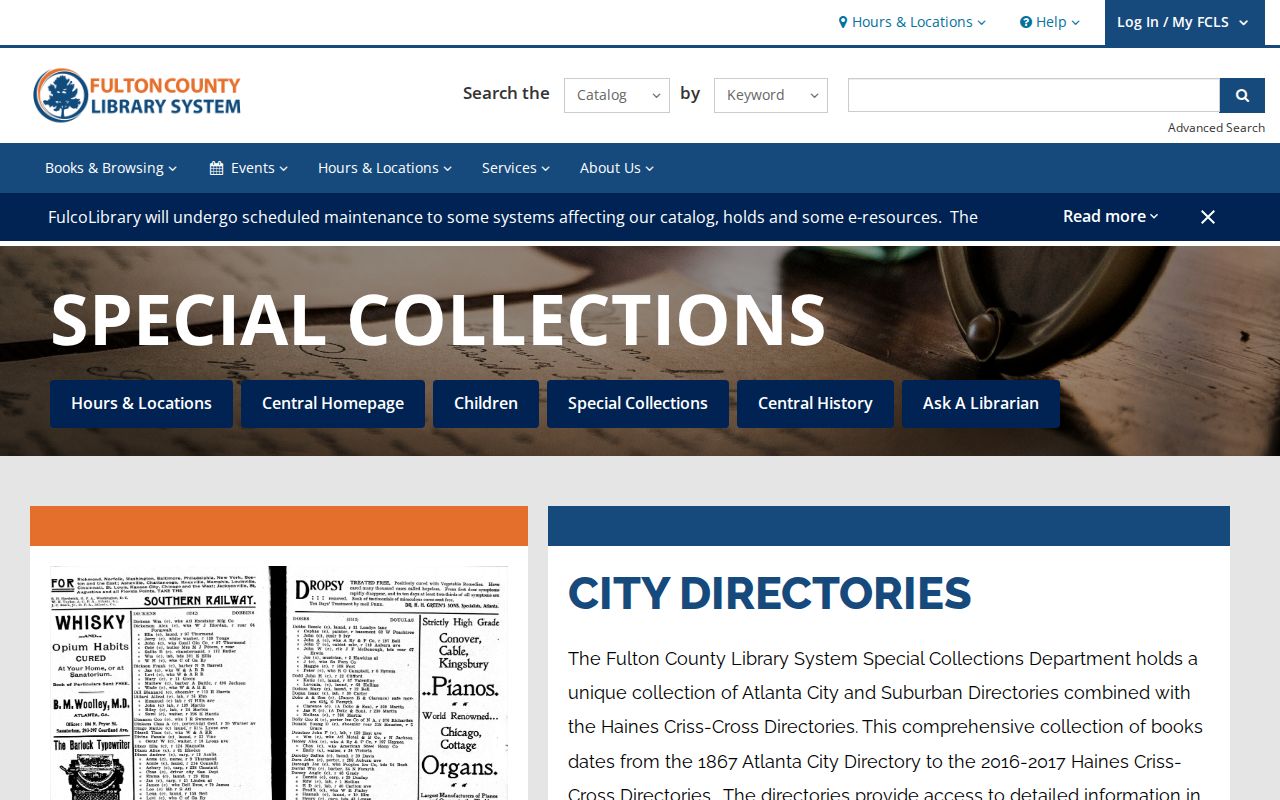
The captured collection page confirms the long city and reverse-directory runs are housed at Central.
East Point Directory Years Online
The Digital Library of Georgia exposes directories for 1867, 1870-1872, 1874-1875, 1877-1878, 1881, 1891-1892, 1896-1899, 1902-1908, 1913-1914, 1916, 1919, and 1921-1922. Search OCR, then inspect the page image because worn type and narrow columns can hide a valid match. The 1902 title names Mutual Publishing Company; other years cite different compilers.
Central Library's genealogy collection supplies census, cemetery, newspaper, and family-history checks.
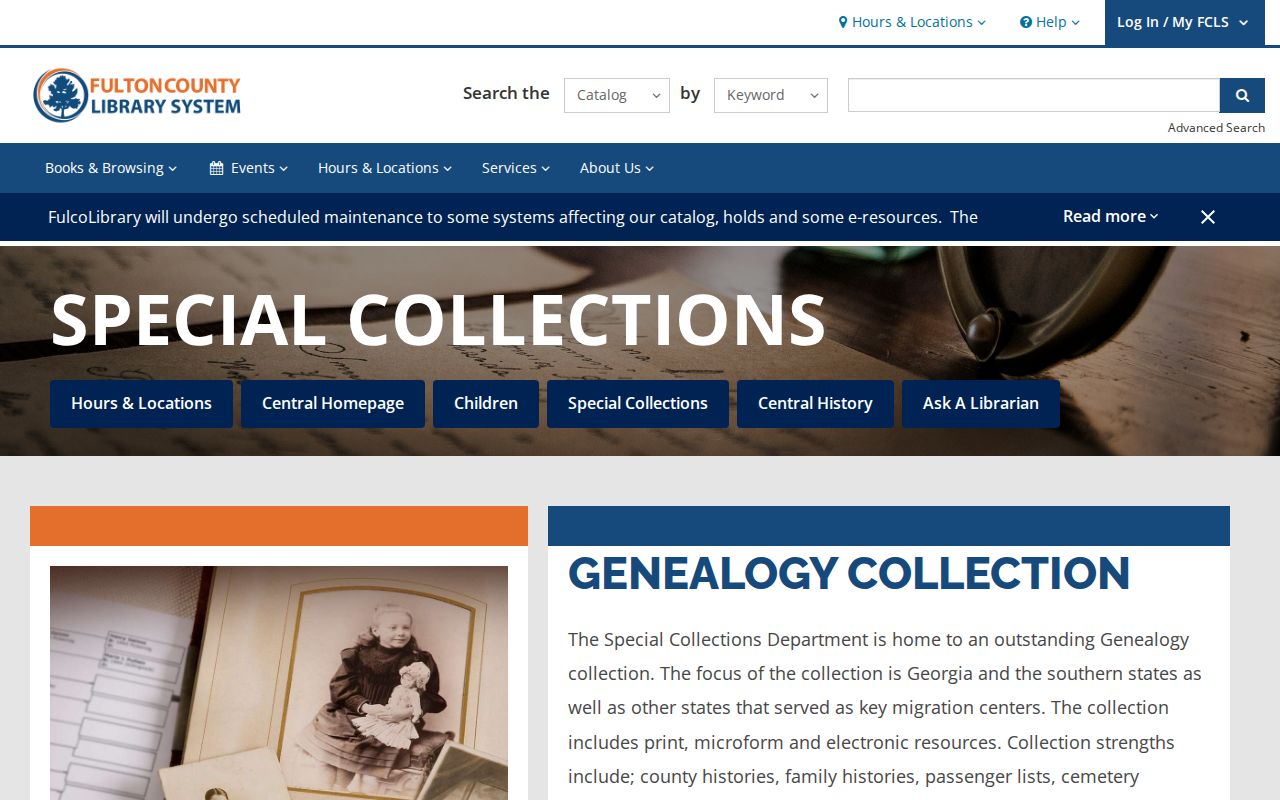
These companion records can test whether a similar name belongs to the same East Point household.
Read East Point Directory Entries
An alphabetical entry may show surname, given name or initial, spouse in parentheses, abbreviated work, and an address after “r,” meaning residence. The street guide arranges numbered addresses and may mark owner or renter status and a telephone.
| Name | Surname, initials, and sometimes spouse |
|---|---|
| Work | Occupation, employer, or business line |
| Residence | House number and street |
| Street side | Numeric addresses and listed householders |
- Criss-cross directory
- A directory arranged by address or phone instead of surname.
- Householder index
- The street-order list of persons tied to numbered places.
- Abbreviation key
- The edition's guide to shortened words and status marks.
No verified East Point household sample was isolated in the scans. Read the actual edition rather than borrowing symbols from another city's book.
Two Routes Through East Point
Begin on the alphabetical side when a name is known. Then inspect the numeric street guide at the same address. Start with the street side when family memory preserves only the house. Nearby entries can distinguish two people with the same initials.
A reverse listing identifies a listed occupant, not necessarily the assessed owner. Deeds and tax records answer a different question. That contrast may reveal a relative, a recent move, or publication lag. Modern address work belongs in the East Point street directory.
Trace East Point Families Yearly
City directories bridge the years between federal census schedules. A repeatable method keeps one similar name from becoming a false family link.
- Choose a volume near a known census, deed, or family event.
- Search the name, then the street guide and nearby addresses.
- Copy spelling, spouse, work, address, marks, and phone exactly.
- Move one edition at a time and preserve unexplained gaps.
- Pair early entries with census, deed, probate, obituary, and cemetery records.
The 1950 census is the latest public population schedule in 2026 under the 72-year rule. Later East Point city directories continue an address trail but do not give a full census household.
Campbell County Alters East Point
Campbell County was absorbed into Fulton County in December 1932. East Point research that crosses that date should use both county names. Earlier deeds, tax, probate, marriage, and court material may be cataloged under Campbell even when a directory shows a place now understood as East Point.
Georgia Archives reports broad county microfilm coverage through at least 1900 and near-complete original tax digests from about 1872. This fallback matters when a city directory line predates the county merger.
East Point Family Archives
The East Point Historical Society at 1685 Norman Berry Drive holds photographs, maps, burial information, yearbooks, family files, and Suburban Reporter copies. It welcomes family, biography, and house research on Wednesday and Saturday from 10:00 a.m. to 1:00 p.m.; call 678-243-0572. Its advertised digital catalog failed during research, so direct contact is the sound route.
Check the Historical Society before visiting.

The archive can add local context that a one-line directory entry cannot supply.
Missing East Point Directory Names
An absent name does not prove a move. Publishers omitted people, initials varied, married names changed, and one adult might represent a whole home. Street names and numbers could also shift.
Check the next edition, initials, variants, the street side, and the abbreviation key. Compare Haines, telephone books, census, tax, deed, probate, obituary, and newspaper sources. Require more than a matching name before joining records into one life story.
East Point Directory Timeline
The historical sequence helps choose the right shelf. Fulton County was formed in December 1853. The Atlanta directory shelf begins in 1859-1860, just after East Point's railroad terminus was established in 1857. Suburban coverage begins in 1867. East Point was incorporated in 1887, so a place can appear in early directories before it existed as an incorporated city.
| Date | Change affecting East Point research |
|---|---|
| 1859-1860 | Opening years of Central Library's Atlanta city-directory shelf |
| 1867 | Atlanta city and suburban coverage begins; digitized years also start |
| 1932 | Campbell County merges into Fulton, changing the county catalog path |
| 1946 | Haines criss-cross address coverage begins |
| 1991 | Publication of the Atlanta city-directory run ends |
| 2016-2017 | Latest documented Haines volumes on the Central shelf |
Telephone-book digitizations become visible from 1933. The overlap among printed city directories, telephone books, and Haines lets a researcher compare how different publishers described the same address. A disagreement should be dated and preserved, not forced into one answer.
East Point History Adds Context
Directory evidence reflects the city's changing form. East Point grew from a railroad terminus, passed through an early industrial period, expanded during the postwar building boom, and later experienced redevelopment and airport influence. Older downtown and rail-corridor addresses are more likely to benefit from early city directories and maps. Postwar subdivisions may become clearer once Haines volumes, telephone books, subdivision plats, and permit evidence overlap.
The Historical Society formed in 1979 at the urging of the East Point Woman's Club. Its Centennial Quilt research points to local institutions such as Union Baptist, founded in 1866, and shows why church, school, and civic archives can become useful companions. Access to private congregation records depends on that repository's permission. Public historical facts can identify where to ask, but they do not guarantee that a membership list survives or is open.
The former NARA Southeast Records Center also stood in East Point's Colonial Hills from 1955 until its move to Morrow in the early 2000s. NARA Atlanta now reports about 175,000 cubic feet of regional federal records. This local archive story does not make federal files city directories, but it gives East Point researchers a nearby route for census, military, naturalization, and federal agency material that can corroborate a directory identity.
Directory chronology also guards against false precision. The city shelf, reverse run, and telephone scans overlap only in some years. A resident can be absent because an edition skipped the suburb, a household did not list, or the publisher used initials. State the exact source and year, then explain only what the line shows.
Preserve Each East Point Citation
Keep the volume title, year, page, publisher, abbreviation key, and repository with each finding. That short citation lets another researcher repeat the city directory search and check the image against a later source.